
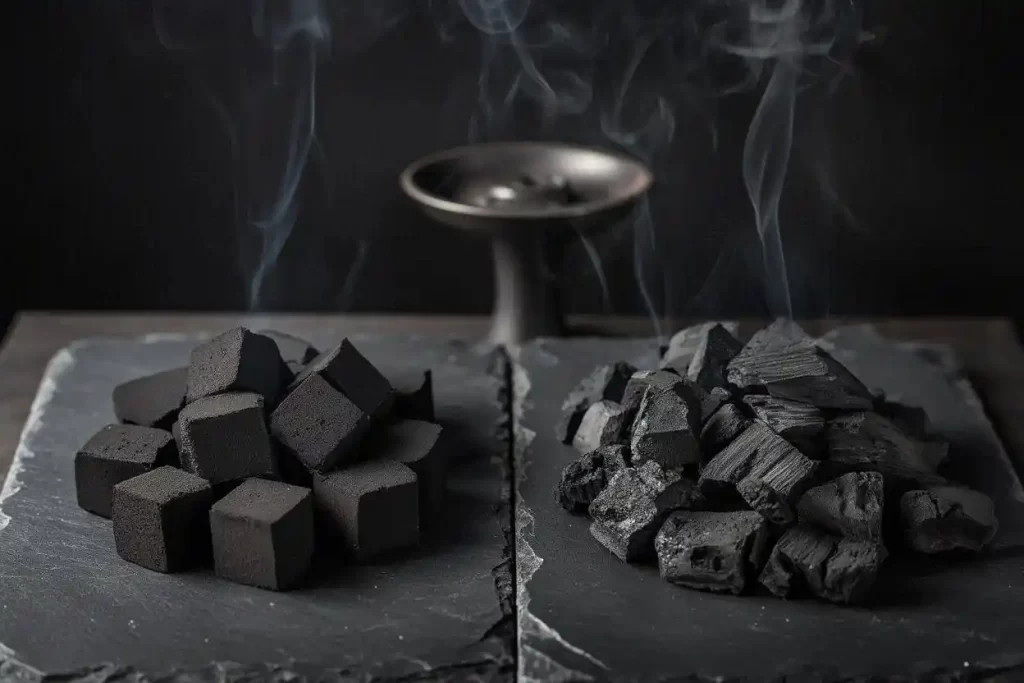
When it comes to hookah sessions, the debate around coconut vs wood hookah charcoal is one every enthusiast eventually faces. Both options are widely available, but they perform quite differently. Understanding each type helps you make a smarter choice for your setup.
What Is Coconut Hookah Charcoal?
Coconut hookah charcoal comes from compressed coconut shells that have been carbonized at high temperatures. The production process creates a dense, uniform charcoal that burns efficiently and consistently throughout the session.
This type has gained popularity in recent years. Many hookah cafes and home users prefer it because of its clean burn and minimal odor. It also produces significantly less ash compared to other types.
Key characteristics of coconut charcoal include:
- Long burn time (60–90 minutes per piece)
- Low ash production
- Neutral taste that does not affect shisha flavor
- Stable and high heat output
- Eco-friendly, made from agricultural byproduct
What Is Wood Hookah Charcoal?
Wood charcoal comes from burning various types of hardwood such as bamboo or lemon wood. This is the traditional form of charcoal that people have used for generations in hookah and grilling.
Wood charcoal tends to ignite faster than coconut charcoal, making it convenient for casual users. However, quick-light varieties often contain chemical accelerants that leave an unpleasant aftertaste. The burn time is also generally shorter, requiring more frequent charcoal changes.
Key characteristics of wood charcoal include:
- Fast ignition, especially quick-light types
- Shorter burn time (30–45 minutes per piece)
- Higher ash production
- May affect shisha flavor if not fully lit
- Lower density compared to coconut charcoal
Coconut vs Wood: Side-by-Side Comparison
To fully understand the differences between coconut and wood hookah charcoal, you need to evaluate them across several important factors.
Heat Consistency: Coconut charcoal maintains a stable temperature throughout the session, while wood charcoal may fluctuate and require more active management from the user.
Flavor Impact: Coconut charcoal burns cleanly and does not interfere with your tobacco or herbal shisha taste. Wood charcoal, particularly quick-light varieties, can introduce a smoky or chemical undertone that affects the overall flavor experience.
Health Considerations: Coconut charcoal contains no chemical additives, which means it produces fewer toxic byproducts when fully lit. Quick-light wood charcoal uses chemical accelerants that may pose greater health concerns during use.
Environmental Impact: Coconut charcoal is a sustainable product made from coconut shell waste, a byproduct of the food industry. Wood charcoal, depending on its source, may contribute to deforestation if producers do not source it responsibly.
Which Option Works Best for You?
For home users who value flavor and quality, coconut charcoal is clearly the better option. It delivers a cleaner, more consistent session without compromising the taste of premium shisha. The longer burn time also means fewer interruptions.
For business owners running hookah lounges, indobriquettescharcoal provides a wide range of guides and resources to help you make smarter sourcing decisions. Wood charcoal still suits situations where quick ignition matters more than session length.
Conclusion
The coconut vs wood hookah charcoal comparison clearly shows that each type serves a different purpose. Coconut charcoal stands out for its clean burn, neutral flavor profile, and eco-friendly production, making it the preferred choice for most modern hookah users. Wood charcoal remains practical for quick, casual sessions. Your decision should reflect your priorities whether that is flavor quality, convenience, sustainability, or cost efficiency. Knowing these differences helps you invest in the right charcoal for a better hookah experience every time.


