
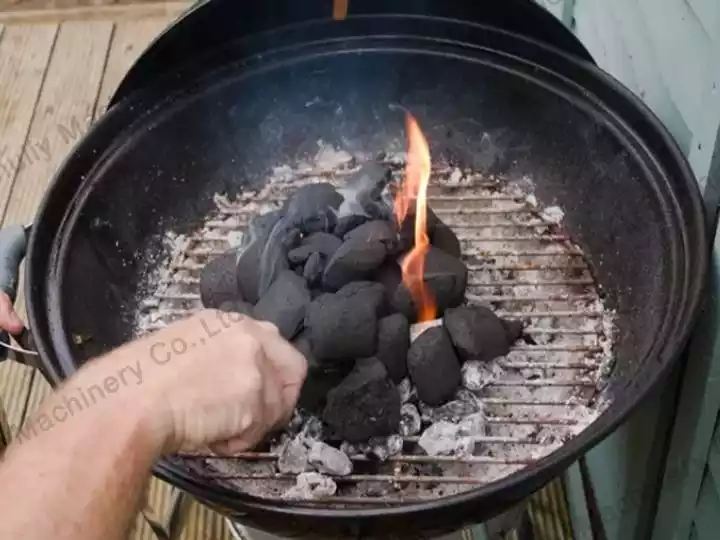
Barbecue Charcoal Briquette, Economical and Efficient Solution, How Barbecue Briquettes Work, Barbecue briquettes are a popular fuel source for outdoor grilling. They are known for their long burn time, consistent heat, and affordability. But have you ever wondered how barbecue briquettes actually work? Understanding the process behind their function can help you grill more efficiently and safely. For more information, check out Barbecue Charcoal Briquette.
What Are Barbecue Briquettes?
Barbecue briquettes are compressed blocks made primarily from charcoal, combined with other materials such as sawdust, starch (which acts as a natural binder), and occasionally chemical additives that help improve ignition and burning performance. These materials are finely ground, mixed together and then compressed under high pressure to form uniform, dense cubes.
The result is a fuel source that burns more slowly and evenly than traditional lump charcoal, making it ideal for long grilling sessions where consistent heat is essential. Because of their shape and composition, briquettes are easier to stack and control during cooking, offering a more predictable grilling experience
How Do Briquettes Ignite
Briquettes need a consistent and dependable source of heat to start burning properly. Common methods include the use of lighter fluid, fire starter cubes, or a chimney starter — each helping to initiate combustion by supplying enough heat to break through the briquette’s compact structure. Once ignition begins, the briquettes go through a series of combustion phases that determine how efficiently they will burn.
Ignition Phase
During this initial phase, the external surface of the briquette begins to catch fire. This stage is crucial as it starts the chain reaction for internal burning.
Burning Phase
As the heat penetrates deeper, the core of the briquette heats up. The starch-based adhesive preserves the briquette’s form and integrity as it burns uniformly from the exterior toward the center.
Ash Phase
After reaching peak combustion, the briquette starts to break down and turn into ash. Despite its appearance, it still releases radiant heat, which can be useful for maintaining cooking temperature without open flames.
how to make barbecue briquettes produce heat
The heat from briquettes is a result of slow and controlled combustion. As oxygen feeds the fire, the carbon in the charcoal reacts to form carbon dioxide, releasing heat. Since the briquettes are uniform in size and density, they offer consistent heat, which is ideal for grilling meats, vegetables and even baking.
Why Use Barbecue Briquettes
Here are some advantages of using barbecue briquettes:
- Longer burn time: Perfect for slow-cooking or smoking.
- Consistent temperature: Ensures even cooking without hot spots.
- Cost-effective: Cheaper than many other types of fuel.
- Easily available: Found in most hardware or grocery stores.
Tips for Better Briquette Use
- Use a chimney starter for an even and eco-friendly ignition.
- Refrain from using too much lighter fluid, as it can result in an unpleasant chemical flavor.
- Wait until the briquettes are covered in white-gray ash before starting to cook.
- Control airflow in your grill to manage temperature.
Conclusion
Understanding how barbecue briquettes work helps you make better choices when grilling. With proper use, they can elevate your barbecue experience by providing steady heat and reliable performance. So the next time you fire up the grill, remember the science and technique behind each briquette. For more tips and products, visit Jacoid.